Introduction
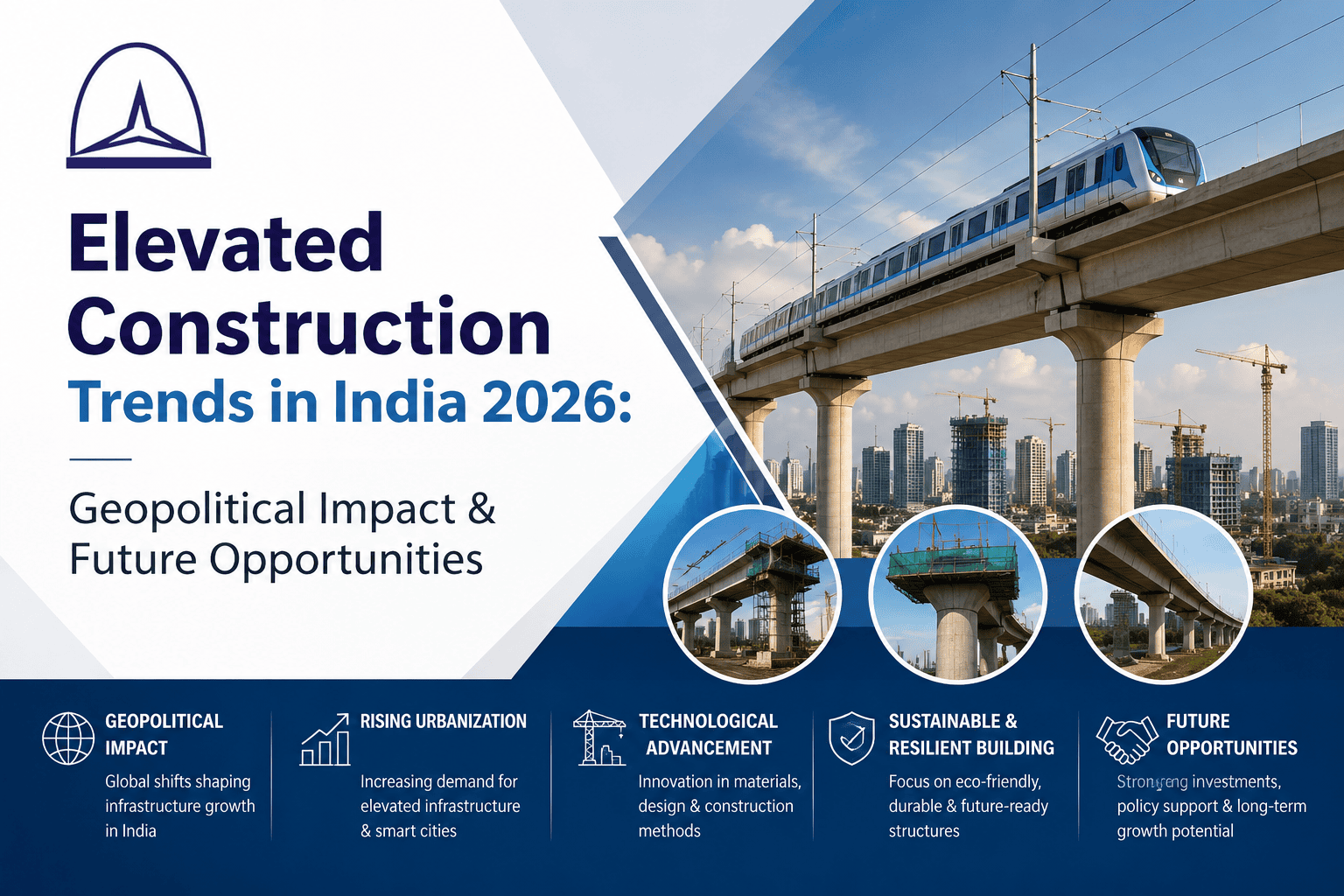
India’s elevated construction sector is witnessing unprecedented growth in 2026, driven by large-scale infrastructure investments, industrial expansion, and the increasing demand for efficient elevated structure solutions. The transformation is creating new opportunities for businesses looking to build resilient infrastructure while optimizing costs and project timelines.
At the same time, geopolitical developments, changing global supply chains, fluctuating steel prices, and India’s growing role as a manufacturing hub are reshaping the construction landscape. Companies that understand these evolving market dynamics are better positioned to execute projects efficiently and remain competitive.
This article explores the latest elevated construction trends in India during 2026, examines the geopolitical factors influencing the industry, highlights key challenges, and discusses future opportunities for project owners, contractors, and industrial developers.
The Rapid Growth of Elevated Construction in India
The demand for elevated construction has increased significantly over the last few years due to India’s ambitious infrastructure development initiatives and industrial modernization.
Rather than expanding horizontally, industries are increasingly utilizing vertical spaces through elevated steel platforms and multi-level structures to maximize operational efficiency.
Several factors are driving this growth:
- Rapid development of industrial corridors and manufacturing clusters
- Expansion of metro rail, airports, and transportation infrastructure
- Increasing demand for logistics parks and automated warehouses
- Government investments in smart cities and urban infrastructure
- Rising adoption of prefabricated steel construction technologies
- Growing focus on sustainable and recyclable construction materials
Several industries are investing heavily in elevated infrastructure to improve productivity while reducing construction timelines.
Top Elevated Construction Trends Shaping India in 2026:
1. Expansion of Industrial Elevated Platforms
Modern factories increasingly require elevated operational platforms for equipment installation, maintenance access, conveyor systems, and production workflows. These structures improve plant efficiency while utilizing available space more effectively.
2. Rise of Multi-Level Warehousing
India’s booming logistics and e-commerce sectors have accelerated demand for multi-level warehouses. Elevated platforms enable businesses to increase storage capacity without expanding land requirements, particularly in urban industrial zones.
3. Growth of Modular Steel Construction
Prefabricated steel components manufactured off-site are reducing construction durations considerably. Modular systems ensure consistent quality, minimize material wastage, and reduce on-site labour dependency.
4. Digital Construction Technologies
Building Information Modeling (BIM), 3D structural modeling, drone surveys, and AI-assisted project management have become integral to modern construction planning. These technologies improve design accuracy, coordination, and project execution.
5. Sustainability Becoming a Core Priority
Steel remains one of the world’s most recyclable construction materials. Organizations increasingly prefer elevated steel construction in india due to its reduced environmental impact, faster installation, and compatibility with green building initiatives.
How Geopolitical Changes Are Influencing India’s Construction Industry?
Global geopolitical developments have become one of the most significant external factors affecting construction projects worldwide. During 2026, several international and domestic developments continue influencing India’s infrastructure growth.
i) Global Steel Price Volatility
Conflicts, trade restrictions, shipping disruptions, and fluctuating commodity prices have contributed to varying steel costs across international markets. Since structural steel forms the backbone of elevated infrastructure, material price fluctuations directly impact project budgets and procurement strategies.
ii) Supply Chain Diversification
Many global manufacturers are shifting production away from single-source supply chains to improve resilience. India has emerged as a preferred manufacturing destination, creating increased demand for industrial facilities, warehouses, and elevated steel infrastructure.
iii) Government Infrastructure Investments
India continues investing heavily in highways, railway modernization, ports, airports, industrial parks, and smart city initiatives. Increased capital expenditure is creating sustained demand for elevated and steel structures across both public and private sectors.
iv) Make in India and Manufacturing Growth
Government initiatives encouraging domestic manufacturing have accelerated the establishment of production facilities across multiple industries. New manufacturing plants require elevated platforms, mezzanine floors, equipment support structures, and industrial steel frameworks.
v) Rising Foreign Investments
As multinational companies expand manufacturing operations in India, demand for scalable, future-ready industrial buildings continues to rise. Elevated steel solutions offer flexibility for expansion while maintaining structural integrity and operational efficiency.

Contact Us!
Key Challenges Facing Elevated Construction Projects
Despite strong market growth, construction companies continue facing several operational and economic challenges.
i) Material Cost Fluctuations
Steel price volatility remains one of the largest concerns for developers. Effective procurement planning and long-term supplier partnerships help reduce cost uncertainties.
ii) Supply Chain Disruptions
International shipping delays and logistics bottlenecks can affect project schedules. Companies increasingly prefer sourcing materials domestically whenever possible.
iii) Skilled Workforce Availability
Modern steel construction requires experienced designers, fabricators, welders, and erection teams. The shortage of skilled professionals can impact project quality and timelines.
iv) Regulatory Compliance
Construction companies must comply with updated building codes, environmental regulations, safety requirements, and structural standards throughout project execution.
v)Project Timeline Management
Large infrastructure projects involve multiple stakeholders. Proper planning, digital monitoring, and prefabrication techniques help minimize delays and improve coordination.
Why Structural Steel Fabrication Is Becoming the Industry Standard?
The increasing preference for Structural steel fabrication reflects the industry’s shift toward precision engineering and efficient construction practices. Factory-controlled fabrication offers several advantages over traditional site-based construction:
- Superior dimensional accuracy
- Faster project completion
- Reduced material wastage
- Improved worker safety
- Consistent quality assurance
- Lower long-term maintenance costs
- Easier transportation and installation
- Better structural performance under varying load conditions
Precision fabrication also enables future modifications and expansion without major structural disruptions, making steel an ideal solution for evolving industrial facilities.
Conventional Construction vs Elevated Steel Construction
| Parameter | Conventional Construction | Elevated Steel Construction |
| Construction Speed | Moderate | Significantly Faster |
| Structural Weight | Heavy | Lightweight |
| Foundation Requirement | Larger | Optimized |
| Future Expansion | Limited | Highly Flexible |
| Material Waste | Higher | Minimal |
| Installation Time | Longer | Shorter |
| Sustainability | Moderate | Highly Recyclable |
| Maintenance | Relatively Higher | Lower |
| Quality Consistency | Site Dependent | Factory Controlled |
| Return on Investment | Gradual | Faster Long-Term Value |
The comparison clearly demonstrates why industrial developers increasingly prefer steel-based elevated systems for modern infrastructure projects.
Specifications of Modern Elevated Steel Structures
| Feature | Specification |
| Primary Material | Structural Steel |
| Fabrication Method | CNC Precision Fabrication |
| Corrosion Protection | Hot Dip Galvanizing / Industrial Coatings |
| Design Standards | IS Codes & Industry Standards |
| Structural Design | Customized Engineering |
| Installation | Modular Assembly |
| Earthquake Resistance | High |
| Load Capacity | Designed Based on Project Requirements |
| Service Life | 40–60+ Years with Proper Maintenance |
| Expansion Capability | Easy Future Modification |
These specifications make elevated structure steel construction an ideal solution for industries seeking durability, flexibility, and long-term operational efficiency.
Build Stronger Infrastructure with Lingam Metals
At Lingam Metal Infrastructure, we understand that every industrial project demands precision, durability, and timely execution. Whether you are developing a manufacturing facility, warehouse, logistics hub, industrial platform, or large-scale infrastructure project, we deliver customized elevated steel construction solutions designed to meet your operational and structural requirements.
Backed by advanced fabrication capabilities, experienced engineers, and a commitment to uncompromising quality, we design, manufacture, and install robust elevated steel structures that ensure long-term performance, safety, and reliability.
From concept to completion, our team works closely with clients to deliver engineered solutions that support business growth and stand the test of time.
Website: Lingam Metal
Future Opportunities for Elevated Construction Beyond 2026
India’s infrastructure outlook remains highly promising. Several emerging sectors are expected to further accelerate demand for elevated steel construction over the coming years. Key growth opportunities include:
- Expansion of semiconductor manufacturing facilities
- Renewable energy infrastructure projects
- Data centers and digital infrastructure
- Multi-level automated warehouses
- Metro rail network expansion
- Industrial corridor development
- Port modernization projects
- Airport expansion programs
- Smart manufacturing facilities
- Green industrial buildings
The increasing integration of AI, robotics, digital engineering, and prefabricated construction techniques will further improve efficiency, sustainability, and project delivery across the industry.
Companies investing in innovation, quality manufacturing, and advanced fabrication capabilities will remain well-positioned to capitalize on these emerging opportunities.
Final Words
India’s elevated construction industry is entering a transformative phase where infrastructure investments, industrial growth, technological advancements, and geopolitical developments collectively shape future opportunities. While challenges such as steel price fluctuations and supply chain disruptions remain, the industry’s shift toward precision engineering, prefabrication, and sustainable steel solutions continues to strengthen its long-term outlook.
Businesses partnering with experienced elevated construction contractors can successfully navigate evolving market conditions and build resilient infrastructure that supports future expansion.
Partner with Lingam Metal Infrastructure for durable, precision-engineered elevated steel structures tailored to your industrial and infrastructure needs.
Frequently Asked Questions:
1. What is elevated construction, and where is it commonly used?
Elevated construction involves building steel-supported platforms and structural systems above ground level for industrial facilities, warehouses, manufacturing plants, logistics centers, commercial buildings, and infrastructure projects.
2. How do geopolitical developments affect elevated construction projects?
Geopolitical events influence steel prices, international logistics, raw material availability, supply chains, and overall project costs, making strategic procurement and planning increasingly important.
3. Why is structural steel preferred for elevated construction?
Structural steel offers high strength, faster installation, excellent durability, design flexibility, lower maintenance, and the ability to accommodate future expansion with minimal disruption.
4. Which industries benefit the most from elevated steel structures?
Manufacturing, logistics, pharmaceuticals, automotive, renewable energy, food processing, warehousing, airports, ports, and heavy engineering industries extensively utilize elevated steel structures.
5. How can businesses choose the right elevated construction company?
Look for companies with proven engineering expertise, advanced fabrication facilities, quality certifications, customized design capabilities, experienced project teams, and a strong track record of delivering industrial steel infrastructure projects on time.