Introduction
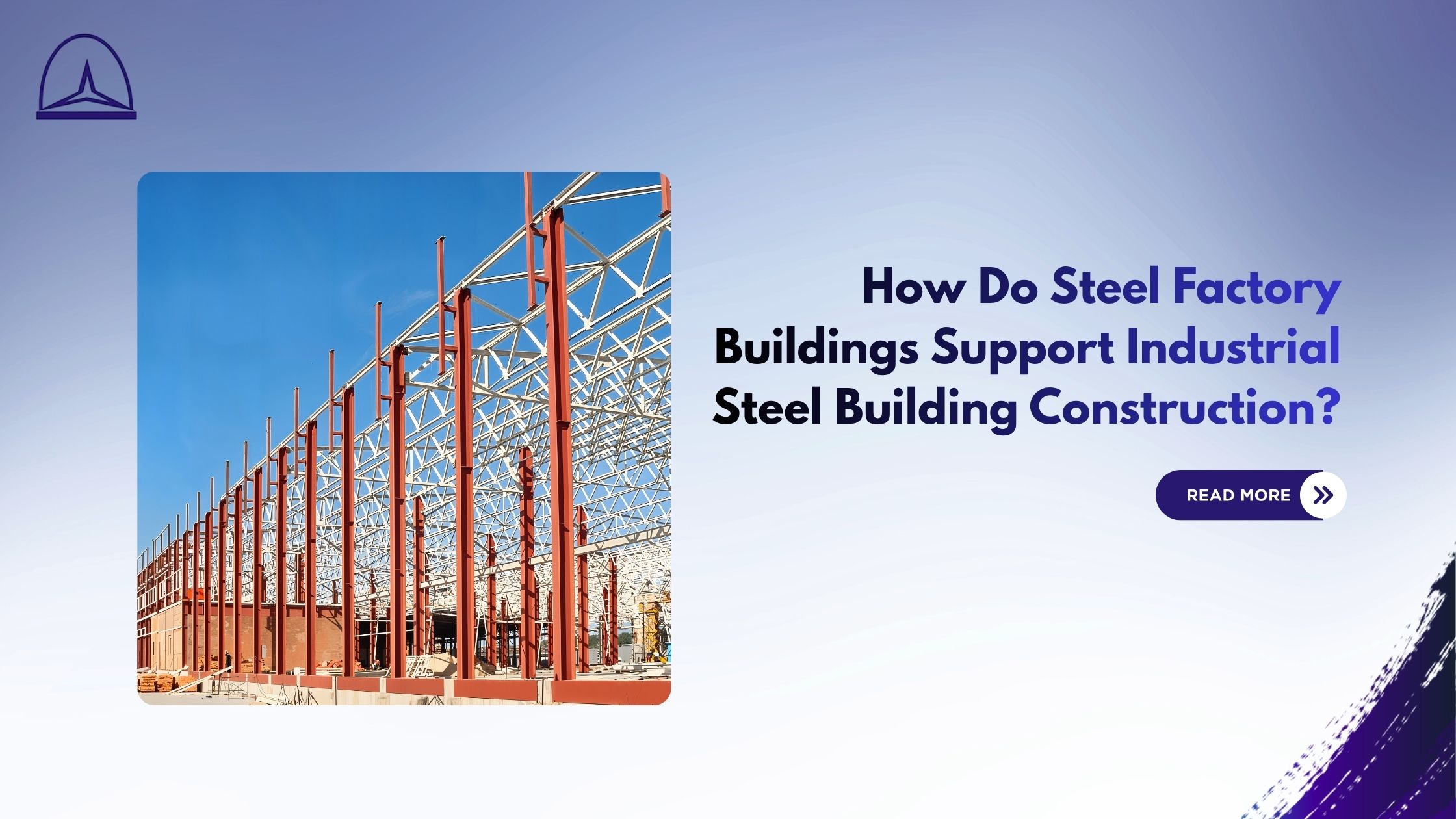
Modern manufacturing and infrastructure projects rely heavily on industrial steel building construction to create strong, scalable, and durable facilities. Steel factory buildings support heavy machinery, large workspaces, and efficient production operations.
With advanced engineering, precise steel building design, and dependable structural steel fabrication, these structures offer faster construction, excellent load capacity, flexibility, and long-term reliability for various industries.
Understanding Industrial Steel Building Construction:
What Is Industrial Steel Building Construction?
Industrial Steel Building Construction refers to the process of designing and assembling large-scale industrial structures using fabricated steel components. These buildings are typically used for factories, warehouses, production plants, and distribution centers.
The construction process involves designing structural frameworks, fabricating steel components, and assembling them on-site to create a durable and efficient industrial facility. With advanced steel fabrication services, manufacturers can develop customized structures that support operational requirements and ensure long-term structural stability.
Why Steel Structures Are Preferred for Industrial Projects
Steel has become the preferred material for industrial construction due to its strength, versatility, and efficiency. Unlike conventional materials, steel structures can handle high loads while maintaining structural integrity over time.
Industries choose steel structures because they:
- Support heavy machinery and industrial equipment
- Allow large clear spans for flexible workspace layouts
- Reduce construction time through prefabricated components
- Require minimal long-term maintenance
These advantages make steel an ideal material for modern factory buildings and industrial facilities.
What Are Steel Factory Buildings?
Steel factory buildings are industrial structures designed primarily using steel frameworks such as beams, columns, and trusses. These buildings serve as the foundation for manufacturing plants, production facilities, and industrial warehouses.
They are engineered to support demanding industrial environments while ensuring safety, operational efficiency, and future scalability.
Key Components of Steel Factory Buildings:
Steel factory buildings are constructed using several structural components, including:
- Structural steel columns and beams
- Industrial roof trusses and support systems
- Steel platforms and elevated structures
- Roofing and wall cladding systems
- Steel bracing for structural stability
These components work together to form a durable structure capable of handling heavy industrial loads.
Role of Structural Steel Fabrication in Factory Buildings
Structural steel fabrication plays a critical role in industrial construction. Fabrication involves cutting, shaping, and assembling steel components according to engineering specifications before installation.
Professional steel fabrication services ensure that every structural element meets required quality and safety standards. In regions like Tamil Nadu, experienced providers specializing in steel fabrication Chennai contribute significantly to the development of reliable industrial infrastructure.

Contact Us!
How Steel Factory Buildings Support Industrial Steel Building Construction
Steel factory buildings directly contribute to the efficiency and strength of Industrial Steel Building Construction by providing a flexible and durable structural system.
1. High Load-Bearing Capacity for Heavy Machinery
Industrial factories often operate heavy machines, cranes, and production equipment. Steel structures offer exceptional load-bearing capacity, allowing buildings to support these heavy operational loads without compromising structural integrity.
2. Faster Construction Compared to Conventional Buildings
Steel components are fabricated in controlled environments before being transported to the construction site. This reduces on-site work and significantly speeds up construction timelines.
As a result, industries can begin operations sooner compared to traditional concrete-based construction methods.
3. Large Clear Spans for Efficient Factory Layouts
Steel structures allow wide column-free spaces, enabling efficient factory layouts. These open floor plans help industries optimize production lines, storage areas, and equipment placement without structural constraints.
4. Scalable Infrastructure for Future Expansion
Industrial businesses often need to expand operations as production demands grow. Steel factory buildings provide modular structures that allow easy expansion by adding additional bays or sections.
This flexibility ensures long-term scalability without major reconstruction.
5. Durability and Low Maintenance Costs
Steel is highly resistant to environmental factors such as moisture, corrosion, and extreme weather conditions when properly treated. This durability reduces maintenance costs and extends the lifespan of industrial buildings.
6. Improved Safety and Structural Stability
Steel structures are engineered to withstand heavy loads, seismic activity, and harsh weather conditions. This ensures better safety for workers, machinery, and industrial operations.
Primary Elements of Steel Factory Design
1) Structural Beams and Columns
Structural beams and columns form the primary framework of steel factory buildings. They distribute loads evenly throughout the structure, ensuring stability and strength.
2) Roofing and Cladding Systems
Industrial roofing and cladding systems protect the building from environmental conditions while maintaining temperature control and durability.
3) Ventilation and Industrial Workflow Planning
Efficient steel building design also focuses on ventilation, lighting, and workflow planning. Proper ventilation systems ensure safe working environments, while optimized layouts improve operational productivity.
Steel Factory Buildings vs Conventional Industrial Buildings
| Feature | Steel Factory Buildings | Conventional Industrial Buildings |
| Construction Time | Faster due to prefabrication | Longer due to on-site construction |
| Structural Strength | High load-bearing capacity | Moderate load capacity |
| Flexibility | Easy expansion and modification | Limited flexibility |
| Maintenance | Lower long-term maintenance | Higher maintenance requirements |
| Durability | Highly durable with protective coatings | Susceptible to cracking and deterioration |
| Cost Efficiency | Cost-effective over time | Higher long-term costs |
Steel structures provide superior performance, making them the preferred solution for modern steel structures India industrial projects.
Why Lingam Metals Is a Trusted Name in Steel Structures India
When planning an industrial factory or warehouse project, selecting a trusted fabrication partner is crucial. Lingam Metals offers dependable steel structure solutions engineered for strength, scalability, and efficiency, helping industries build durable facilities that support smooth operations and long-term growth.
Advanced Fabrication Infrastructure
Lingam Metals operates modern fabrication facilities capable of handling large-scale structural projects. Their advanced equipment and skilled workforce ensure precision manufacturing for industrial steel structures.
End-to-End Steel Fabrication Services
From engineering design to fabrication and installation, Lingam Metals offers complete steel infrastructure solutions for factories, warehouses, and industrial facilities across India.
With advanced manufacturing capabilities, skilled engineers, and reliable steel fabrication solutions, Lingam Metals delivers durable industrial structures. Their commitment to quality, precision, and timely project execution makes them a trusted name in steel structures across India.
Conclusion
Steel factory buildings play a vital role in modern Industrial Steel Building Construction by providing strong, scalable, and cost-effective infrastructure for industrial operations. With benefits such as faster construction, high load capacity, and long-term durability, steel structures offer an ideal solution for factories and warehouses.
By working with Lingam Metals the experienced steel fabrication professional, industries can build reliable facilities designed to support productivity, safety, and future expansion.
Explore the services and learn more about their steel infrastructure solutions by vising Lingam Metal Infrastructure
Frequently Asked Questions:
1. What are steel factory buildings used for?
Steel factory buildings are commonly used for manufacturing plants, warehouses, production facilities, and logistics centers that require durable and spacious industrial infrastructure.
2. Why is steel widely used in industrial building construction?
Steel offers high strength, durability, flexibility, and faster construction timelines, making it an ideal material for industrial structures.
3. How does structural steel fabrication improve industrial building strength?
Structural steel fabrication ensures that components are manufactured with precision and meet engineering specifications, improving the overall strength and stability of the building.
4. How long does industrial steel building construction take?
Construction timelines vary depending on project size, but steel structures are generally completed faster than conventional buildings due to prefabricated components.
5. Why choose steel fabrication services in Chennai for factory projects?
Chennai is home to experienced fabrication companies and skilled engineers who provide high-quality steel fabrication solutions for industrial infrastructure projects